 Back
Back 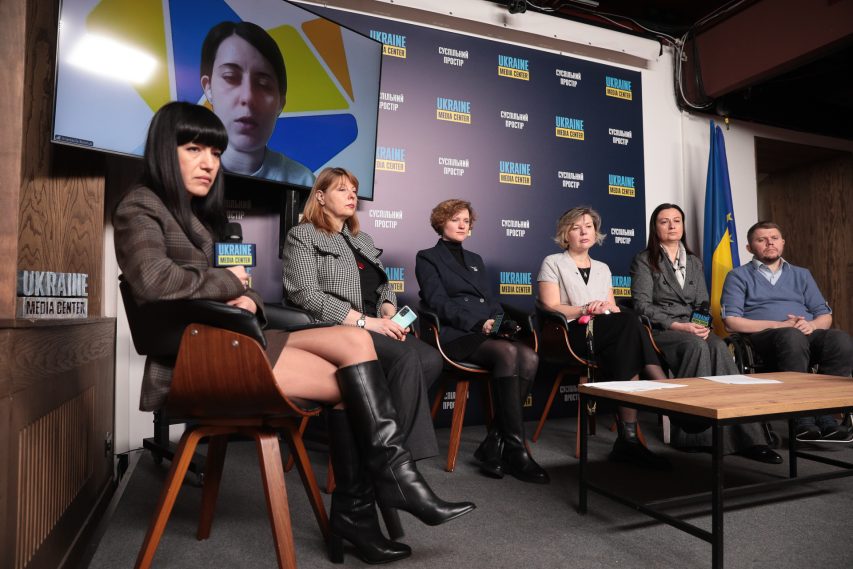
Ukraine launches Public Platform to build more accessible and inclusive society
A coalition of organizations focused on equity, accessibility, and inclusion unveiled the creation of a Public Platform supporting a barrier-free society in Ukraine. The initiative was formalized through a memorandum signed by participating groups and introduced at the Media Center Ukraine.
The Platform aims to strengthen advocacy and support government efforts to design policies that address the needs of diverse groups identified in the National Strategy for Creating a Barrier-Free Environment in Ukraine, including people with disabilities, those with functional impairments, parents of young children, older adults, military veterans, and internally displaced persons.
“Bringing these organizations together under a single Platform is a natural next step in ongoing public sector efforts that make a daily impact on creating a more accessible society,” said Tetiana Lomakina, Advisor-Presidential Commissioner for a Barrier-Free Environment.
Vitalii Pcholkin, executive director of the Group for Active Rehabilitation NGO, stressed the importance of involving people with disabilities in shaping policies that affect them directly. “Our desire to be part of the community and amplify the voices of people with disabilities,” he said.
Alina Frolova, founder of Stratcom Ukraine and the Invictus Games project in Ukraine, emphasized that the Platform’s primary goal is to strengthen collaboration and achieve greater impact in synergy. “Nowadays, veterans are drivers of many changes, such as how we accept people with disabilities, how we work with them, and how we integrate them into society. We work in rehabilitation through sports. But now there are many other practices. Therefore, involvement with one another is an opportunity to strengthen the state and develop areas of accessibility and barrier-free environments everywhere,” she said.
The Platform’s core objectives include:
– Advocating for systemic reforms to improve accessibility across sectors.
– Promoting quality rehabilitation and wider access to assistive technologies.
– Expanding community-based services, including supported living, early intervention, education, and employment opportunities.
– Supporting adaptive sports infrastructure, particularly for veterans.
– Increasing knowledge exchange and accessibility compliance monitoring.
Read more: https://mediacenter.org.ua/news
